
¡Enhance Your English Skills with Interactive Lessons!
Take your English to the next level with our personalized lessons. Through 4 readiness check sections, we gently assess your progress and adjust the learning experience to match your pace. Start today and improve your language skills at your own rhythm.
Readiness Check 1
The simple present tense and the present continuous, Be Going To + Base Form for the future.
GETTING-READY EXERCISE
Let’s check some key knowledge. Read and analyze the examples and infer some information. Explain your answers.
SIMPLE PRESENT
A: What do you do at 8:00 PM?
B: I usually watch TV, but sometimes I read a book.
A: Do you go out at that time?
B: No, I don’t. I prefer to stay home and relax.
A: I always go for a walk after dinner. It helps me relax.
B: Do you walk alone?
A: Yes, I do. I enjoy the quiet.
B: I don’t like walking alone. I always go with a friend.
1. Simple present tense is used to express…
2. Are there any changes in the verb affirmative, negative sentences or interrogative sentences?
3. What else can you identify?
PRESENT CONTINUOUS
A: Hey, what are you doing now?
B: I’m a little busy. I’m doing my homework.
A: So am I. I am cleaning my apartment.
B: Not surprise, weekends are meant for such.
A: And what are you doing tomorrow morning?
B: I’m meeting my friend.
A: Are you working after that?
B: No, I’m not. I will be relaxing at home.
1. Present continuous is used to express…
2. Are there any changes in the verb affirmative, or interrogative sentences?
3. What else can you identify?
BE GOING TO
A: What are you going to do next week?
B: I’m going to visit my grandparents.
A: Are you going to stay for a long time?
B: No, I’m not. Just for the weekend. What about you?
A: I’m going to go to a concert next Saturday.
B: Maybe we can do something on Sunday?
A: Sounds great!
1. Be going to is used to express…
2. Are there any changes in the verb affirmative, or interrogative sentences?
3. What else can you identify?
For more information, explore the Grammar Expander Connectivity 1, p. 126-144
At weekends - British
On weekends - American
EXERCISE 2: IDENTIFY THE MISTAKES
Choose one of the stories, find and correct the mistakes. Explain your answers.
Option 1: My healthy family
a. Every day, I go to the gym because I love exercising.
b. However, my sister do not exercise because she is a couch potato. She prefer to sleep late.
c. My brother and my stepdad usually goes running very early.
d. What my mother does? Well, she usually takes karate classes.
e. Next week, she does going to a competition, and I am so happy for her.
f. Next year, we are to travel to Cartagena.
g. I am so happy because I am going see the sea for the first time.
Option 2: John's Story
a. Hi, my name is John and I’m go to tell you about my life.
b. I lives in Bogota, Colombia with my wife and kids.
c. I really love the neighborhood because it’s safe and close to an amazing mall.
d. My family and I doesn’t like to stay at home on weekends.
e. For this reason, we are travel to Cali tomorrow!
f. We traveling by bus because it’s cheaper.
g. However, it’s a long trip, but we going to have a lot of fun!
Travelling - British
Traveling - American
EXERCISE 3: LISTEN AND INFER
Listen to the conversations. Choose the correct sentence based on the information you hear. Explain your answers.
Conversation 1.1:
Conversation 1.2:
Conversation 2:
Conversation 3:
What do they think about the pink dress?
EXERCISE 4: YOU CAN DO IT!
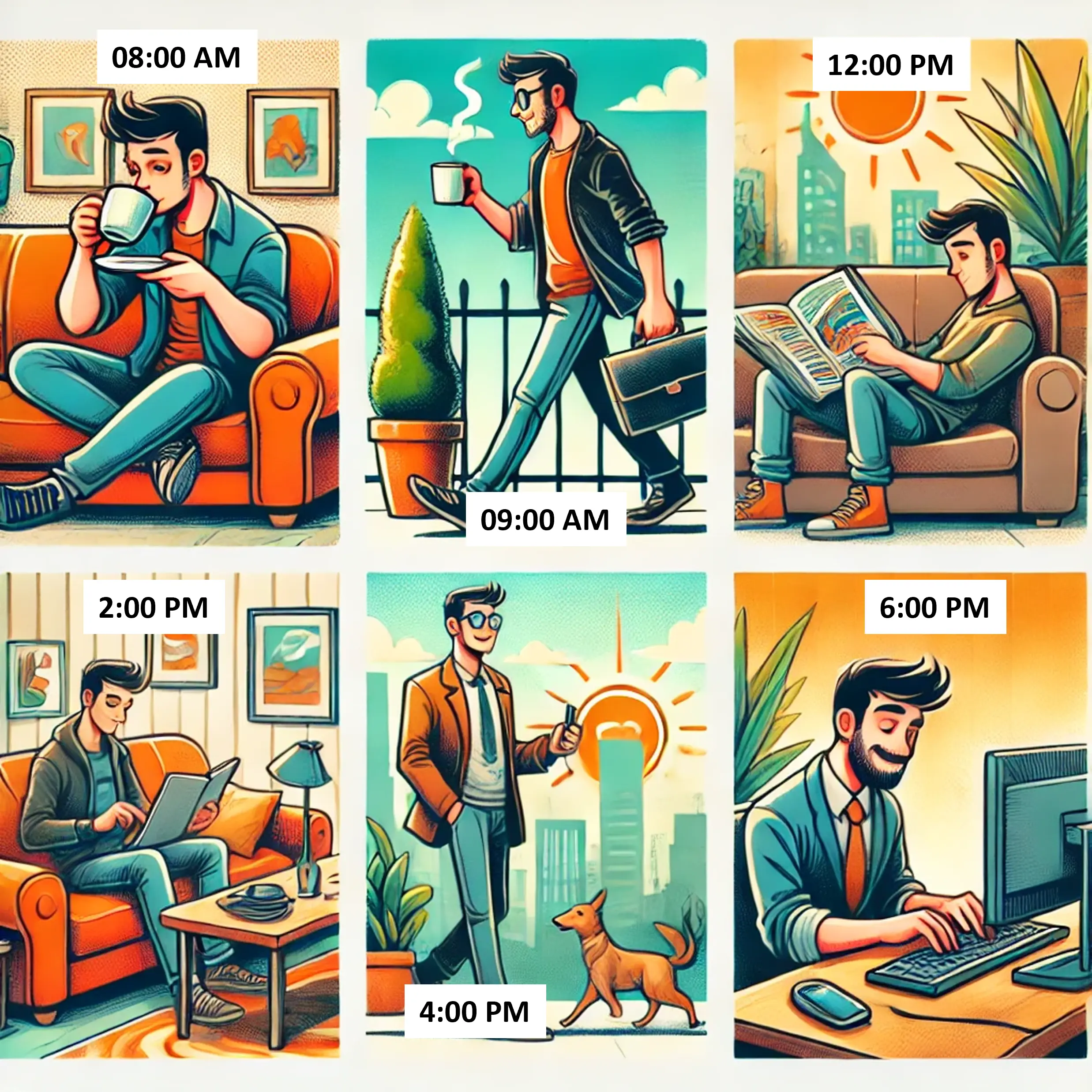
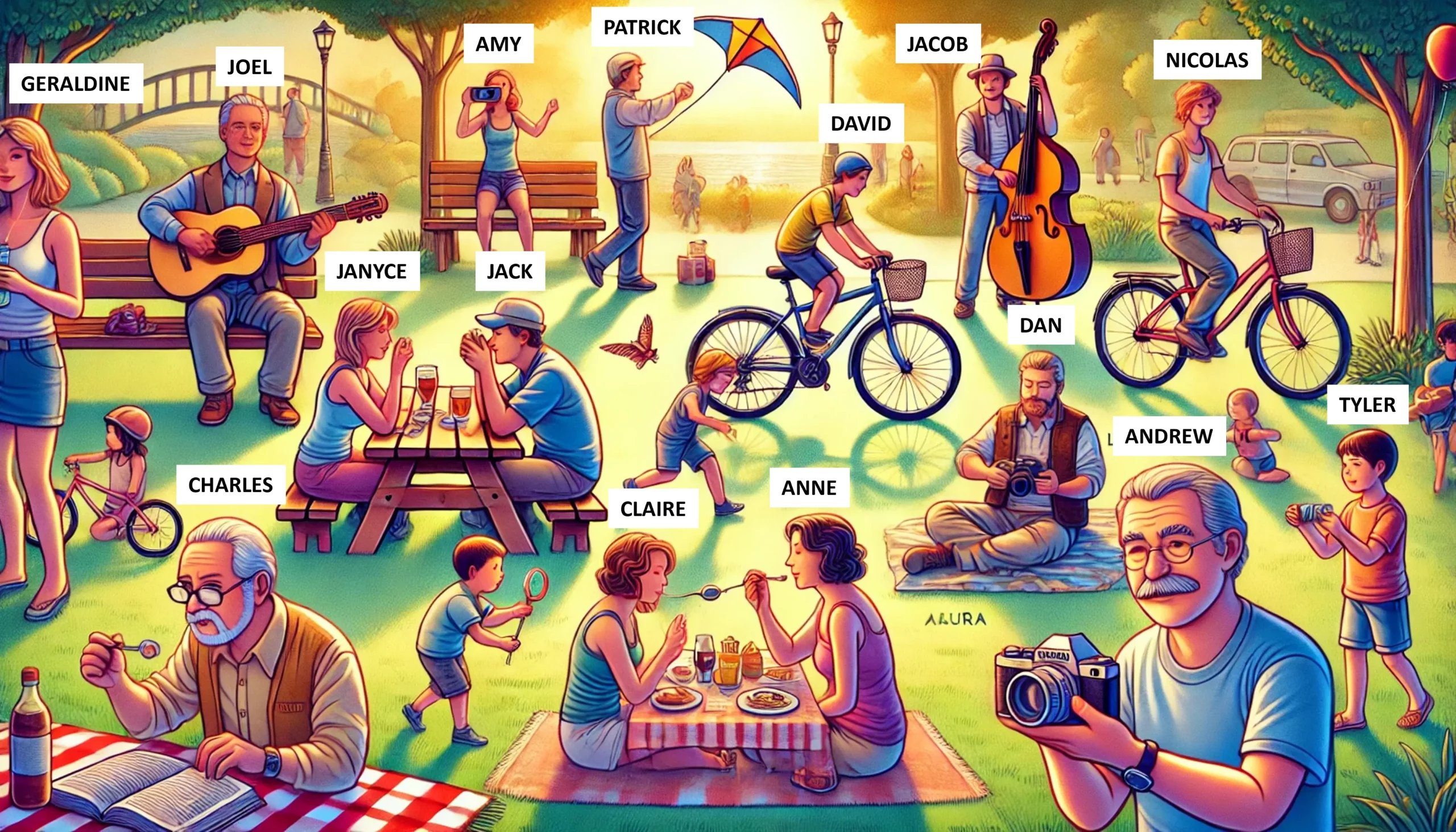
Choose one of the following images and describe what you see! Say as much as you can!
FINAL CHALLENGE: TEAM WORK
Team up with the person next to you and complete one of the challenges.
Challenge 1
Evening habits. What's your routine like?
Tell your classmate what you do every day at 8:00 pm.
Challenge 2
Busy Tomorrow? Let’s Talk About Plans!
Tell your classmate what you are doing tomorrow morning.
Challenge 3
Future Plans: What’s Coming Next?
Tell your classmate two plans you have for next year.
Readiness Check 2
Can, have to, Could and Should: Meaning and Form.
GETTING-READY EXERCISE
Pay attention to the following examples. What grammar rules can you infer?
SHOULD
A: I’m visiting Colombia next week. What should I do?
B: You should visit Cartagena. It’s beautiful! You should go to the beach.
A: Should I try the local food?
B: Yes, you should!
A: What about Bogotá? Should I go there too?
B: If you like sunny days, you shouldn’t go there.
A: Should I bring warm clothes?
B: Yes, you should. Bogotá is cold.
a. What is should used for?
b. What word comes after should?
c. How do you create a sentence in negative by using should?
d. Other:
CAN AND HAVE TO
A: I start my job tomorrow. What do I have to do?
B: You have to arrive on time. A good worker has to be punctual.
A: Can I wear jeans?
B: No, you can’t. You have to wear formal clothes.
A: Do I have to bring lunch?
B: It’s up to you. You can eat at the cafeteria or bring your own lunch.
A: Can I ask my manager questions?
B: Actually, you have to, and he has to answer.
a. What is the difference between have to and can?
b. How do you use have to and can in third person?
c. How do you create a question by using have to and can?
d. Other:
COULD
A: I want to stay in shape.
B: You could start by eating more vegetables or going to the gym.
A: I don’t like the gym. Could I exercise at home?
B: Yes, you could! You could try yoga or dancing at home.
A: Could I do it every day?
B: Yes, you could do it every day or take rest days to let your body recover
a. What is could used for?
b. How do you use could in third person?
c. How do you create a question by using could?
d. Other:
For more information, explore the Grammar Expander Connectivity 1, p. 126-144
EXERCISE 2: IDENTIFY THE MISTAKES
Each sentence has a mistake. Identify and correct the mistake. Explain your answers.
1. Do you could please close the window?
2. She shoulds eat low-calorie meals.
3. You have be here at 9 o'clock.
4. My friends has to be at the airport early.
EXERCISE 3: COMPLETE THE SENTENCES
Use the previous sentences to complete the exercise.
1. The flight is at 10:00 am, so
2. This meeting is really important!
3. It's freezing!
4. If she wants to lose weight,
FINAL CHALLENGE: DECISION-MAKING
Team up with the person next to you and complete one of the challenges.
Challenge 1
Travel Like a Local!
Hi ASW Lovers! I am Danielle and I am from France. This is my first time in Colombia, and I need some suggestions
and
recommendations.
Danielle, 17
Challenge 2
First Day? Here’s What You Have to Do!
Hi guys! It is my first day in my first job. I am so nervous. Please! give me some suggestions, recommendations and
possibilities using modal verbs.
Charles, 20
Challenge 3
Stay Healthy: What Could You Do?
Hello there! My sister wants to become a healthy person. Give her some suggestions, recommendations and possibilities
using modal verbs.
Miguel, 32
Readiness Check 3
Object pronouns, Comparative adjectives, and Superlative adjectives
Comunicative Goal: Describe your Surroundings
GETTING-READY EXERCISE
Check the next examples. Then, infer the rules, structures, and usage of each topic.
OBJECT PRONOUNS
A: Do you like your neighborhood?
B: Yes, I love it! It’s quiet and clean.
A: Do you have good neighbors?
B: Yes, I do. I know them very well, and I like them a lot!
A: I have friendly neighbors too.
B: Do you talk to them often?
A: Yes, I do. I always greet them in the morning.
B: That’s nice. My neighbors sometimes invite me for coffee, and I bake cookies for them during the holidays.
A: That’s sweet! I think caring about them makes the neighborhood feel more like a community.
How do you use the object pronouns?
COMPARATIVE ADJECTIVES
A: Do you prefer Central Park or National Park?
B: I think it depends.
A: Why?
B: Central Park is bigger, but National Park is quieter.
A: But Central Park has many activities. It’s more exciting.
B: That’s true, but National Park is better for relaxing.
A: I think National Park is less beautiful than Central Park.
B: I know, but National Park is more peaceful.
Why are some comparatives with –er and others with more?
SUPERLATIVE ADJECTIVES
A: What’s the worst thing about your city?
B: The traffic is the worst!
A: What’s the best way to travel there?
B: The subway is the fastest way to go anywhere.
A: Is it the cheapest option?
B: Yes, it is. Taxis are the most expensive.
A: I think buses are the most uncomfortable.
B: I agree!
What’s the function of a superlative?
For more information, explore the Grammar Expander Connectivity 1, p. 126-144
EXERCISE 2: REORGANIZE AND EXPLAIN:
Select one of the next options. Change the paragraph to make the information less repetitive. Explain your
choices.
A. The Countryside vs. The City
I love the countryside because it is peaceful. My cousin prefers the city because there are more things to do. He enjoys the nightlife and the big buildings. I like the fresh air and the quiet. We visit each other often.
Sample solution: The countryside is more peaceful than the cities, but my cousin prefers them because there are more things to do.
B. Apartments vs. Houses
I like living in a house because it has more space. My niece prefers an apartment because it is easy to clean. She likes being close to stores and restaurants. I enjoy having a yard and a big kitchen. Kitchens in the apartments are small. We both like where we live.
C. Taxis vs. Buses
I always take taxis because they are fast. My aunt prefers buses because they are cheap. She doesn’t like taxis because they cost too much. I think buses are too slow. We use different types of transportation.
D. Small Stores vs. The Mall
I like small stores because they are quiet. My nephew prefers the mall because there are more options. He enjoys walking around and seeing new things. I like the personal service in small stores. We have different shopping habits.
E. Shopping Online vs. Going to the Store
I prefer shopping online because it is easy. My fiancée likes going to the store to see things before buying them. She thinks online shopping is not always safe. I like finding good deals on websites. We have different ways to shop.
FINAL CHALLENGE: CRITICAL THINKING
Team up with the person next to you and complete one of the challenges.
Challenge 1
Welcome to my Neighborhood!
Student 1: Describe your neighborhood. Talk about people, places, and atmosphere.
Student 2: Do you agree with the answers? Why? Why not?
Challenge 2
Comparing places: Which One is Better?
Student 1: Compare two parks or cities. Use words like bigger, cleaner, and more interesting
Student 2: Do you agree with the answers? Why? Why not?
Challenge 3
Best and Worst of City Traffic!
Student 1:Describe the traffic in your city. Compare two transportation means.
Student 2: Do you agree with the answers? Why? Why not?
Readiness Check 4
Simple past tense Statements, Yes/No question, Information questions
GETTING-READY EXERCISE
Read the conversations and pay attention to the verbs. Complete the chart with information from the conversations.
THE FLIGHT
A: How was your last flight?
B: It was long but comfortable.
A: Did you sleep on the plane?
B: No, I didn’t. I watched movies.
A: What did you eat on the plane?
B: I ate chicken and rice. It was okay.
A: Did the flight arrive on time?
B: No, it was two hours late!
How do you use the object pronouns?
THE BEST VACATION
A: Where did you go for your best vacation?
B: I went to Italy. It was amazing!
A: What did you do there?
B: I visited museums and ate a lot of pasta.
A: Did you take many photos?
B: Yes, I took hundreds of them!
A: Did you buy any souvenirs?
B: Yes, I bought a beautiful painting.
Why are some comparatives with –er and others with more?
THE WORST VACATION
A: Tell me about your worst vacation.
B: I went to a beach, but it rained all day.
A: Did you do anything fun?
B: No, I didn’t. I just stayed in my hotel.
A: Did you try to visit other places?
B: Yes, but the weather was terrible everywhere.
A: That sounds awful!
What’s the function of a superlative?
For more information, explore the Grammar Expander Connectivity 1, p. 126-144
| THE SIMPLE PAST TENSE | ||
|---|---|---|
| REGULAR VERBS USED IN THE CONVERSATIONS | IRREGULAR VERBS USED IN THE CONVERSATIONS | HOW MANY TIMES WAS THE VERB TO BE USED IN THE CONVERSATIONS? |
| NEGATIVE SENTENCES | INTERROGATIVE SENTENCES | EXTRA NOTES |
Explain to the student right next to you the simple past using your notes. Don’t take more than one minute!
EXERCISE 2: CORRECT THE MISTAKES
The next paragraphs have some grammar mistakes. Choose one and find and correct each mistake. Explain your answers.
Option 1: Bumpy Road on a Trip
1. We drived on a long road through the mountains.
2. The road were very bumpy.
3. I was feel very uncomfortable because it was so shaky.
4. We didn’t knew it was going to be this bad.
5. The driver tryed to go slowly, but it didn’t help much.
6. Finally, after three hours, we was arrive at our destination.
Option 2: Great Vacation with Extreme Activities
1. Last summer, I taked a trip to Costa Rica for adventure.
2. I was walk through the jungle, and it was amazing!
3. We didn’t climbed the volcano because it was raining.
4. I swimmed in a beautiful waterfall and saw colorful birds.
5. My friend was try surfing, but he fell many times.
6. At the end of the trip, we feeled so happy and tired.
Option 3: Someone Stole My Luggage
1. I leaved my suitcase at the hotel lobby for a moment.
2. When I came back, my bag were not there!
3. I didn’t saw anyone take it, so I was very confused.
4. The hotel staff tried to help me, but they finded nothing.
5. I was call the police, and they asked me some questions.
6. Sadly, I never getted my luggage back.
EXERCISE 3: CREATIVE WRITING
Now it’s your turn. Create a paragraph telling what you did on your last vacation.
EXERCISE 4: YOU CAN DO IT!
Choose one of the images and describe the woman’s last vacation in detail. Use long, complete sentences. Try to say as much as you can.



FINAL CHALLENGE: CREATIVITY AND COLLABORATION
Team up with the person next to you and complete one of the challenges. You have one minute to prepare with your partner and one minute to share your ideas.
Challenge 1
How Was the Trip?
You and your friend(s) went on a trip. Describe your last flight or bus trip. Say what happened and how you felt.
Challenge 2
Best Vacation Ever!
You and your friend(s) travel often. Talk about your best vacation. Say where you went and what you did.
Challenge 3
A Trip to Forget!
You and your friend(s) travel often. Talk about a bad vacation. Explain what went wrong.